
SPECIES PROFILE
Species profile
A premium euryhaline marine fish suited to coastal ponds, cages and controlled land-based systems.
Also known as: Gilthead bream; Gilt -head seabream; Dorade; Orata
SPECIES PROFILE
Pictographic profile
- Water
- Marine/brackish
- Behaviour
- Benthic forager
- Feeding
- Carnivore-omnivore
- Culture route
- Cage, pond or marine RAS
- Status
- Established Mediterranean culture
IDENTITY
Species overview
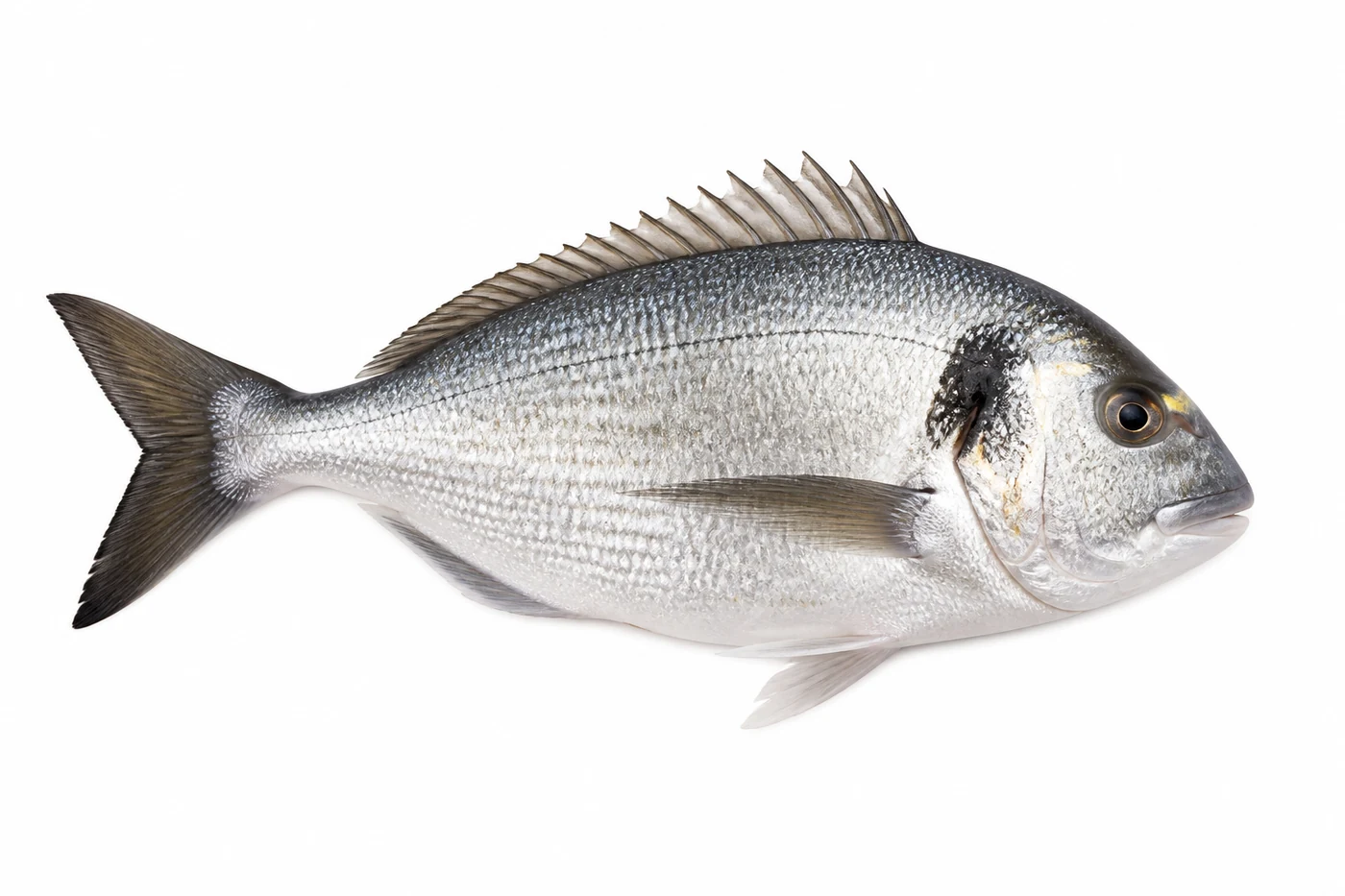
Gilthead seabream is an established Mediterranean aquaculture species recognized by its deep silver body and golden head band. It can use marine and brackishwater environments, but temperature, oxygen, feeding and stocking decisions should reflect its life stage and seasonal growth pattern.
IDENTITY
Biological features
- Deep oval silver body with a characteristic golden band between the eyes.
- Strong jaws adapted to molluscs and hard-bodied prey.
- Widely accepted premium whole-fish and fillet product.
PROFILE
Historical background
Gilthead seabream progressed from lagoon capture and extensive coastal culture to controlled hatchery seed and intensive cage production around the Mediterranean. Its established production base provides technical precedent, but local climate, seed access and market demand still determine project relevance.
PROFILE
Habits and behaviour
Juveniles use protected lagoons and estuaries, while adults occupy coastal marine habitats over sand, rock and seagrass. The species is an opportunistic carnivore-omnivore feeding on molluscs, crustaceans and other benthic organisms.
PROFILE
Biology and life-cycle relevance
Gilthead seabream is a protandrous hermaphrodite: fish generally mature first as males and some later become females. Spawning, larval rearing, nursery and grow-out require different photoperiod, temperature, salinity and feed strategies.
PROFILE
Suitable water ecosystem
Temperate to warm marine and brackishwater lagoons, coastal ponds and well-exchanged sea sites.
WATER AND NUTRITION
Indicative water-planning parameters
- Temperature
- 18-26 °C for grow-out; avoid prolonged thermal extremes
- Salinity
- 20-38 ppt; life stage and acclimation matter
- pH
- 7.5-8.3
- Dissolved oxygen
- Target at or above 5.5 mg/L
- Additional control focus
- Maintain oxygen, stable salinity and low nitrogenous waste; coordinate temperature with feeding and biomass; monitor behaviour and skin or gill condition.
Validate stage-specific targets, alarm limits and nitrogen thresholds through the approved system design.
WATER AND NUTRITION
Nutritional profile
- High-quality protein
- Moderate fat profile that can provide EPA and DHA
- Provides vitamin B12, selenium, phosphorus and other marine micronutrients
Nutrition varies with feed, environment, season, harvest size, body portion and preparation. Use approved food-composition or laboratory data before publishing numeric per-100 g values.
PRODUCTION
Production cycle
Managed broodstock produce marine eggs and larvae, followed by live-feed larviculture, weaning and nursery. Juveniles enter cages, ponds or land-based systems and are harvested to a buyer-defined size and presentation.
PRODUCTION
Production systems
- Marine cages
- Coastal ponds and lagoons
- Land-based marine RAS
- Hatchery and nursery
- Live holding
PRODUCTION
Seed supply
Use hatchery juveniles with confirmed species, health and size history. Long-distance supply planning must address transport oxygen, temperature, salinity, receiving quarantine and seasonal seed availability.
PRODUCTION
Nursery
Early stages require stable marine water, live-feed capability and controlled weaning. Later nursery design should support grading, vaccination where professionally approved, and low-stress transfer to grow-out.
PRODUCTION
Ongrowing techniques
Marine cages dominate established production, while ponds and RAS offer different control and cost profiles. Seasonal temperature, oxygen, storms, fouling and site carrying capacity shape cage performance; feed load shapes land-based treatment.
PRODUCTION
Feed supply
Use complete marine-fish feeds with pellet characteristics matched to size and temperature. Feed management should minimize loss while supporting consistent growth and flesh quality.
PRODUCTION
Diseases and control measures
Bacterial, parasitic and viral risks vary by region and system. Health-screened seed, fallowing or crop separation, net hygiene, water stability and professional health programmes reduce risk.
PRODUCTION
Harvesting techniques
Fasting, crowding, pumping or netting and rapid chilling should follow a validated welfare and quality plan. Whole-fish appearance can be affected by scale loss and rough handling.
PRODUCTION
Handling and processing
The fish is commonly sold whole, gutted or filleted. Cold-chain continuity, hygienic evisceration, lot identity and buyer size grades are central controls.
PRODUCTION
Market and trade
Seabream is a recognized premium species in Mediterranean and international channels. New projects should validate local name recognition, preferred size and price against imported or wild supply.
STATUS AND TRENDS
Status and trends
The sector continues to improve genetics, feeds, cage technology, welfare management and product differentiation. Land-based production attracts interest where biosecurity, proximity to market or environmental control justify cost.
MAIN ISSUES
Main issues
- Dependable hatchery seed and logistics
- Marine disease and parasite pressure
- Seasonal temperature and oxygen
- Cage-site exposure or RAS energy cost
- Whole-fish quality and market grading
SYSTEM DESIGN
System-design implications
- Marine water chemistry affects materials, treatment selection and biofilter sizing.
- Temperature and seasonal growth should inform production scheduling.
- Hard-pellet feeding and solids capture must be coordinated.
- Hatchery, nursery and grow-out modules require different hydraulic intensity.
PROJECT DEFINITION
Move from species interest to project definition
A suitable system depends on exact stock, life stage, target biomass, source water, utilities, site, operating capability, regulation and market plan.
Internal links: Species directory; Relevant service; Products & Equipment; Knowledge Center; Contact
Explore a Seabream Culture System