
SPECIES PROFILE
Species profile
A visually distinctive hybrid tilapia whose exact parentage, salinity tolerance and performance depend on the strain.
Also known as: Red tilapia; Red hybrid tilapia; Florida red tilapia; Taiwan red tilapia -strain names require confirmation
SPECIES PROFILE
Pictographic profile
- Water
- Fresh/brackish
- Behaviour
- Social grazer
- Feeding
- Omnivore
- Culture route
- Pond, Biofloc, RAS or cage
- Status
- Strain validation required
IDENTITY
Species overview
Red tilapia is a commercial colour hybrid rather than one single species. Different strains may include Nile, Mozambique or blue tilapia ancestry, so seed identity and supplier documentation should be confirmed before defining water targets, production claims or market positioning.
IDENTITY
Biological features
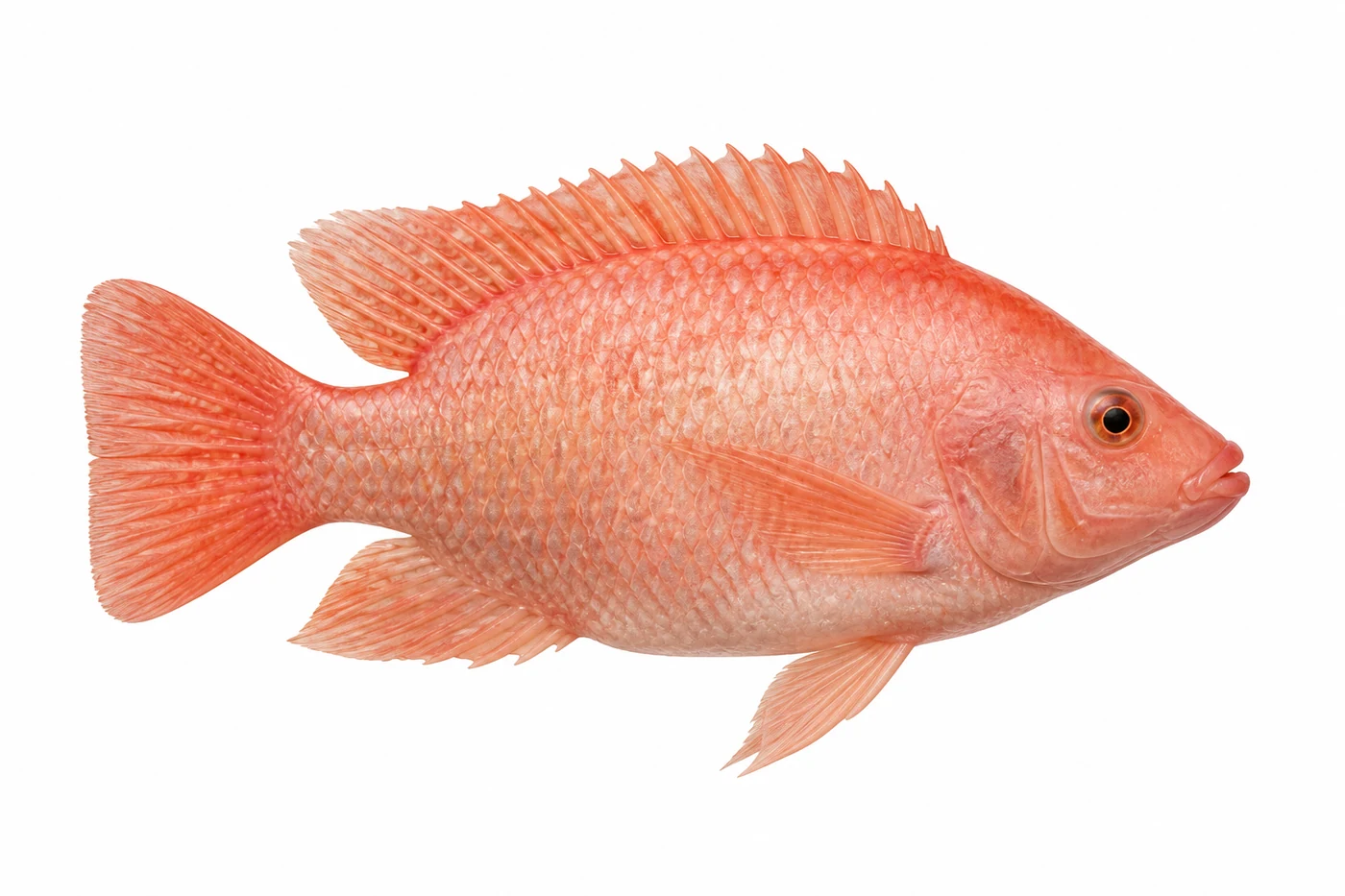
- Pink to red-orange body with the typical deep cichlid form and continuous dorsal fin.
- Hardy warm-water fish that readily accepts formulated feed.
- Distinct colour supports whole-fish and live-market differentiation.
PROFILE
Historical background
Red tilapia was developed through selection and hybridization for colour and market appeal. Because different commercial red strains have different ancestry, the colour name should never replace strain documentation in technical content.
PROFILE
Habits and behaviour
Like other Oreochromis tilapias, red hybrids are active omnivorous grazers using plankton, periphyton, detritus and formulated diets. They establish social hierarchies and may reproduce readily if mixed-sex populations are used.
PROFILE
Biology and life-cycle relevance
Most commercial red tilapia strains are maternal mouth brooders. Parentage influences growth, colour stability, cold tolerance and salinity response. Production strategy should therefore be based on a documented strain, not colour alone.
PROFILE
Suitable water ecosystem
Warm freshwater or brackishwater, depending on strain, with stable temperature, good oxygen and controlled solids.
WATER AND NUTRITION
Indicative water-planning parameters
- Temperature
- 26-30 °C
- Salinity
- 0-15 ppt for many strains; confirm stock-specific tolerance
- pH
- 6.5-8.5
- Dissolved oxygen
- Target at or above 5 mg/L
- Additional control focus
- Confirm strain, sex strategy and salinity tolerance; manage oxygen, solids, ammonia, nitrite, alkalinity, reproduction and colour-related market specifications.
Validate stage-specific targets, alarm limits and nitrogen thresholds through the approved system design.
WATER AND NUTRITION
Nutritional profile
- High-quality lean protein
- Low to moderate fat
- Provides vitamin B12, selenium and phosphorus; omega-3 content reflects diet and production environment
Nutrition varies with feed, environment, season, harvest size, body portion and preparation. Use approved food-composition or laboratory data before publishing numeric per-100 g values.
PRODUCTION
Production cycle
Selected broodstock produce mouth-brooded fry, followed by sex-management where approved, nursery and warm-water grow-out. The cycle should include colour, uniformity and market acceptance checks specific to the strain.
PRODUCTION
Production systems
- Freshwater and brackishwater ponds
- Biofloc tanks
- Warm-water RAS
- Cages
- Aquaponics subject to crop and nutrient balance
PRODUCTION
Seed supply
Confirm strain, parentage where available, health, sex strategy, salinity history and supplier authorization. Seed should be purchased for documented biological performance, not colour alone.
PRODUCTION
Nursery
Warm, oxygenated nursery systems should support grading, complete feeding and control of unintended reproduction. Colour and deformity observations can be recorded before grow-out.
PRODUCTION
Ongrowing techniques
Ponds, cages, Biofloc and RAS may be suitable depending on strain and site. Biomass, oxygen, suspended solids and reproduction need active management.
PRODUCTION
Feed supply
Complete tilapia feeds are used. Diet, environment and genetics may affect skin colour and flesh composition, so market claims require evidence.
PRODUCTION
Diseases and control measures
Tilapia bacterial and viral diseases can move with seed. Approved stock, quarantine, temperature and oxygen control, sanitation and professional diagnosis are important.
PRODUCTION
Harvesting techniques
Harvest should preserve colour and scale condition for whole-fish markets. Fasting, clean water, gentle netting and rapid chilling reduce quality loss.
PRODUCTION
Handling and processing
Red tilapia may be sold whole, live or filleted. Product naming should identify it as a red tilapia strain or hybrid and avoid an unsupported species claim.
PRODUCTION
Market and trade
Colour can differentiate the product, but acceptance and price vary by market. Buyer research should confirm preferred shade, size, product form and name.
STATUS AND TRENDS
Status and trends
Red strains continue to support niche and premium whole-fish channels. Traceable seed and consistent colour and performance are more important than generic red-tilapia branding.
MAIN ISSUES
Main issues
- Unclear hybrid or strain identity
- Unwanted reproduction
- Cold or salinity tolerance varies by strain
- Colour consistency versus biological performance
- Seed-borne disease
SYSTEM DESIGN
System-design implications
- Seed documentation should identify the commercial strain and production history.
- Mixed-sex production can create unwanted recruitment and size variation.
- Brackishwater operation requires ionic and material review.
- Colour consistency is a market characteristic, not a guarantee of biological uniformity.
PROJECT DEFINITION
Move from species interest to project definition
A suitable system depends on exact stock, life stage, target biomass, source water, utilities, site, operating capability, regulation and market plan.
Internal links: Species directory; Relevant service; Products & Equipment; Knowledge Center; Contact
Define a Red Tilapia Production Plan