
SPECIES PROFILE
Species profile
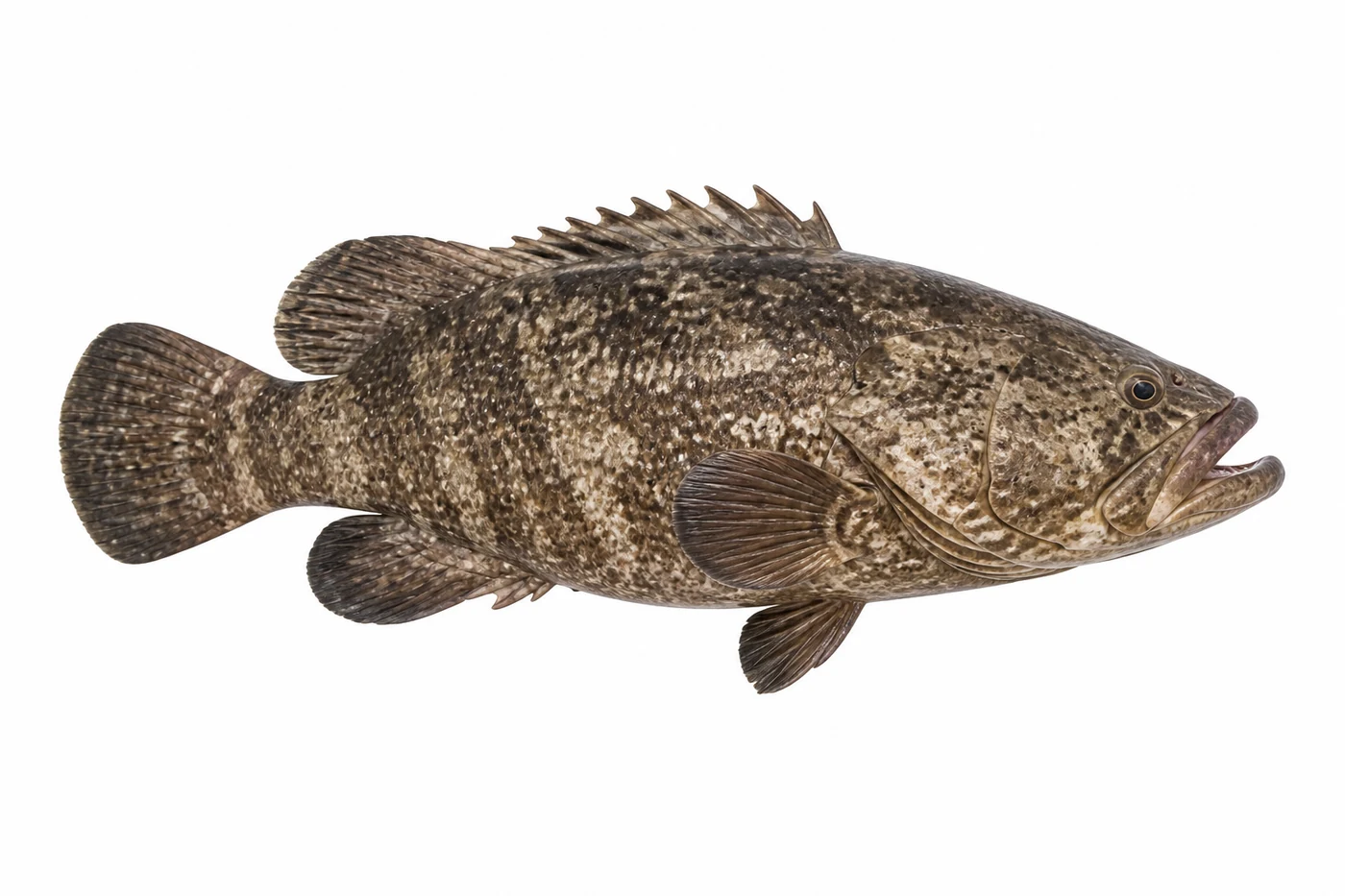
A high-value group of marine predators that requires species-specific planning, shelter awareness and careful size management. Epinephelus spp. (representative visual: Epinephelus lanceolatus) | Also
Also known as: Grouper; Reef cod; Rock cod. Species -level name must be confirmed for every project.
SPECIES PROFILE
Pictographic profile
- Water
- Marine/brackish
- Behaviour
- Territorial bottom predator
- Feeding
- Carnivore
- Culture route
- Cage or marine RAS
- Status
- Exact species required
IDENTITY
Species overview
'Grouper' covers many species with different growth rates, adult sizes and culture requirements. Marine Blue should therefore present grouper as a project category, then confirm the exact species before defining tanks, cages, stocking, feed, treatment and market strategy.
IDENTITY
Biological features
- Robust body, large mouth and ambush-predator form.
- Many species use reefs, rocky structures, estuaries or sheltered coastal habitats.
- Highly valued in live-fish, whole-fish and premium seafood markets.
PROFILE
Historical background
Groupers have long supported high-value reef and live-fish markets. Aquaculture developed through wild-seed capture and later hatchery production for selected species; responsible expansion depends on exact taxonomy, legal seed and reduced pressure on wild stocks.
PROFILE
Habits and behaviour
Groupers are typically demersal predators that hold territories or shelter near structure. They feed on fish, crustaceans and cephalopods. Size hierarchy and cannibalism can occur in nursery stages, making grading, feeding access and shelter strategy important.
PROFILE
Biology and life-cycle relevance
Many groupers are protogynous hermaphrodites, beginning life as females and some later changing to males. Reproductive biology, larval feeding and juvenile development differ by species, so hatchery planning must use a confirmed taxon and stock source.
PROFILE
Suitable water ecosystem
Warm marine or estuarine coastal water with shelter, stable salinity, strong oxygen and controlled organic loading.
WATER AND NUTRITION
Indicative water-planning parameters
- Temperature
- 26-30 °C for many tropical cultured species; confirm by species
- Salinity
- 25-35 ppt; some estuarine species accept lower salinity
- pH
- 7.5-8.3
- Dissolved oxygen
- Target at or above 5 mg/L
- Additional control focus
- Confirm species and size; manage grading, shelter, feed distribution, solids, oxygen, ammonia and nitrite; design handling for a powerful predator.
Validate stage-specific targets, alarm limits and nitrogen thresholds through the approved system design.
WATER AND NUTRITION
Nutritional profile
- High-quality lean protein
- Generally low to moderate fat
- Provides vitamin B12, selenium, phosphorus and species-dependent omega-3 fatty acids
Nutrition varies with feed, environment, season, harvest size, body portion and preparation. Use approved food-composition or laboratory data before publishing numeric per-100 g values.
PRODUCTION
Production cycle
The general cycle includes broodstock conditioning, marine larviculture, nursery grading and cage, pond or tank grow-out. Timing, sex biology, temperature, feed and market size differ substantially among grouper species and hybrids.
PRODUCTION
Production systems
- Marine net cages
- Coastal ponds for suitable species
- Land-based marine RAS
- Hatchery and nursery
- Live holding and quarantine
PRODUCTION
Seed supply
Specify the exact species or approved hybrid and obtain hatchery juveniles with traceable origin and health records. Wild seed should not be treated as a default source and may be restricted or ecologically damaging.
PRODUCTION
Nursery
Grouper juveniles need shelter or appropriate structure, reliable feeding access and repeated grading to manage cannibalism. Weaning from live or moist feeds to complete pellets should be deliberate.
PRODUCTION
Ongrowing techniques
Marine cages, coastal ponds and RAS may be relevant. Stocking, shelter, current, salinity and temperature must reflect the exact species; feed waste and slow-moving bottom zones require attention.
PRODUCTION
Feed supply
Use a complete feed validated for the species and size. Dependence on raw forage fish can increase waste, biosecurity risk and resource pressure and should not be presented as an ideal system strategy.
PRODUCTION
Diseases and control measures
Viral, bacterial and parasitic diseases can affect hatchery and grow-out. Quarantine, batch separation, net and tank hygiene, vector control and professional diagnosis are central.
PRODUCTION
Harvesting techniques
Live-market fish require gentle capture, fasting, conditioning and oxygenated transport. Chilled fish require rapid cooling and protection from skin and fin damage.
PRODUCTION
Handling and processing
Product may be sold live, whole chilled or processed. Species identity, legal traceability and cold-chain records are important because common names and product values vary widely.
PRODUCTION
Market and trade
Live reef-food-fish and premium restaurant markets can be attractive, but demand, legality, transport mortality and exact species identity must be validated for the destination.
STATUS AND TRENDS
Status and trends
Hatchery seed, complete feeds and closed or land-based systems can reduce reliance on wild inputs. Sustainability and traceability are increasingly important to market acceptance.
MAIN ISSUES
Main issues
- Exact species or hybrid identification
- Wild-seed and forage-fish dependence
- Cannibalism during nursery
- Disease and live-transport risk
- Conservation and trade traceability
SYSTEM DESIGN
System-design implications
- Exact species selection is a non-negotiable design input.
- Nursery modules should allow frequent grading and low-stress handling.
- Marine RAS requires robust solids capture and gas management.
- Live-market projects need welfare-led holding and dispatch workflows.
PROJECT DEFINITION
Move from species interest to project definition
A suitable system depends on exact stock, life stage, target biomass, source water, utilities, site, operating capability, regulation and market plan.
Internal links: Species directory; Relevant service; Products & Equipment; Knowledge Center; Contact
Define the Grouper Species and System