
SPECIES PROFILE
Species profile
A fast-growing open-water marine fish that demands generous swimming volume, oxygen and structural readiness.
Also known as: Cobia; Black kingfish; Ling; Lemonfish; Sergeant fish
SPECIES PROFILE
Pictographic profile
- Water
- Marine
- Behaviour
- Fast open-water swimmer
- Feeding
- Carnivore
- Culture route
- Offshore cage or marine RAS
- Status
- Established but site-sensitive
IDENTITY
Species overview
Cobia is a large, active marine finfish considered for cage farming and land-based systems. Its growth potential is commercially attractive, but body size, swimming behaviour, oxygen demand, grading, handling and harvest logistics have major engineering consequences.
IDENTITY
Biological features
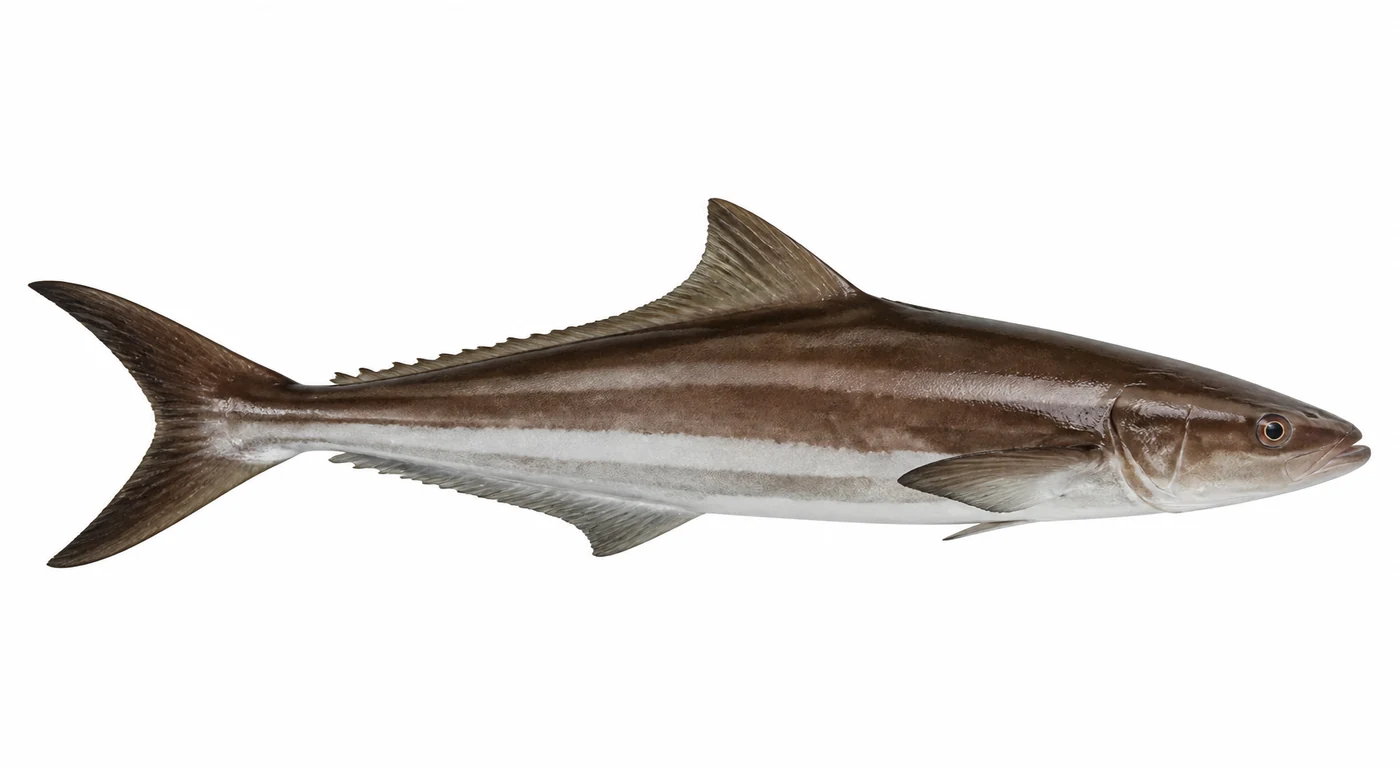
- Long, streamlined dark-brown body with pale lateral bands and a broad flattened head.
- Strong swimmer that uses open coastal and offshore waters.
- Large-bodied premium fish requiring robust containment and handling systems.
PROFILE
Historical background
Cobia emerged as a marine aquaculture species because of rapid growth, feed acceptance and high-quality flesh. Hatchery and cage programmes have developed in several countries, with performance closely tied to seed quality, warm water and robust offshore engineering.
PROFILE
Habits and behaviour
Cobia is pelagic to semi-pelagic and often associates with floating objects, reefs, buoys, rays or larger marine animals. It is an active predator of fish, crabs and squid and responds aggressively to feed.
PROFILE
Biology and life-cycle relevance
A warm-water marine spawner producing pelagic eggs. Larvae require carefully managed live feed and environmental conditions; juveniles grow rapidly when temperature, feed and water quality are suitable.
PROFILE
Suitable water ecosystem
Warm, well-oxygenated marine water with strong exchange or engineered circulation and enough depth and volume for sustained swimming.
WATER AND NUTRITION
Indicative water-planning parameters
- Temperature
- 25-30 °C Parameter Early planning target
- Salinity
- 25-35 ppt
- pH
- 7.5-8.3
- Dissolved oxygen
- Target at or above 5 mg/L; higher margin is prudent at peak biomass
- Additional control focus
- Prioritize oxygen, carbon-dioxide removal, open swimming volume, secure containment, feed distribution and safe handling; monitor nitrogen and solids closely.
Validate stage-specific targets, alarm limits and nitrogen thresholds through the approved system design.
WATER AND NUTRITION
Nutritional profile
- High-quality protein
- Moderate to higher fat depending on feed and cut
- Provides omega-3 fatty acids, vitamin B12, selenium and phosphorus
Nutrition varies with feed, environment, season, harvest size, body portion and preparation. Use approved food-composition or laboratory data before publishing numeric per-100 g values.
PRODUCTION
Production cycle
Broodstock spawn pelagic eggs, followed by intensive larval rearing, nursery grading and marine grow-out in cages or large tanks. Harvest size and timing depend on market, temperature and system economics.
PRODUCTION
Production systems
- Offshore or coastal marine cages
- Large land-based marine RAS
- Hatchery and nursery
- Broodstock systems
- Live holding subject to size and welfare review
PRODUCTION
Seed supply
Use hatchery juveniles with verified identity, health, size and feed history. Transport systems should protect oxygen, temperature and active-swimmer space, and receiving quarantine should precede grow-out.
PRODUCTION
Nursery
Cobia juveniles grow rapidly and require prompt grading, high oxygen and complete feeds. Circular tanks with uniform current support swimming and solids removal.
PRODUCTION
Ongrowing techniques
Large marine cages are a common pathway; land-based RAS requires substantial tank volume, oxygen and feed-load treatment. Cage mooring, storms, currents, net integrity and service access are major engineering inputs.
PRODUCTION
Feed supply
Complete high-energy marine-fish diets reduce reliance on raw forage fish. Feed storage, pellet durability, delivery and biomass estimation directly affect cost and water quality.
PRODUCTION
Diseases and control measures
Parasites and bacterial conditions can challenge cages and tanks. Screened seed, stocking control, environmental monitoring, net hygiene and qualified aquatic-health support are important.
PRODUCTION
Harvesting techniques
Strong fish require controlled fasting, crowding and lifting. The process should protect welfare, worker safety and premium flesh quality, followed by rapid chilling.
PRODUCTION
Handling and processing
Cobia is marketed whole and as high-yield fillets or portions. Hygienic bleeding where required, icing, processing yield records and lot traceability support product consistency.
PRODUCTION
Market and trade
Cobia has premium culinary potential but market familiarity varies. Production should be linked to buyer education, product form, size preference and dependable cold-chain capacity.
STATUS AND TRENDS
Status and trends
Interest continues in offshore cages and controlled marine systems. Engineering resilience, feed efficiency, hatchery capacity and market development remain central to expansion.
MAIN ISSUES
Main issues
- Offshore cage exposure and net security
- High oxygen and feed-load demand
- Seed continuity
- Parasite and health management
- Market development and cold chain
SYSTEM DESIGN
System-design implications
- Culture structures must withstand large, powerful fish.
- Oxygen and degassing should be assessed at peak feed and biomass.
- Grading, vaccination or health handling and harvest need dedicated equipment.
- Cage-site or intake-water quality requires thorough environmental review.
PROJECT DEFINITION
Move from species interest to project definition
A suitable system depends on exact stock, life stage, target biomass, source water, utilities, site, operating capability, regulation and market plan.
Internal links: Species directory; Relevant service; Products & Equipment; Knowledge Center; Contact
Evaluate a Cobia Production Concept