
SPECIES PROFILE
Species profile
A fast-growing surface and mid-water plankton feeder that anchors composite carp production.
Also known as: Catla; Katla; South Asian carp; Indian major carp
SPECIES PROFILE
Pictographic profile
- Water
- Freshwater
- Behaviour
- Surface/mid-water feeder
- Feeding
- Planktivore
- Culture route
- Composite pond or reservoir
- Status
- Established Indian major carp
IDENTITY
Species overview
Catla is a deep-bodied Indian major carp valued for growth and market size. Its surface-oriented feeding niche complements Rohu and bottom-feeding carps, but strong plankton production can also create oxygen and pH swings that demand close pond management.
IDENTITY
Biological features
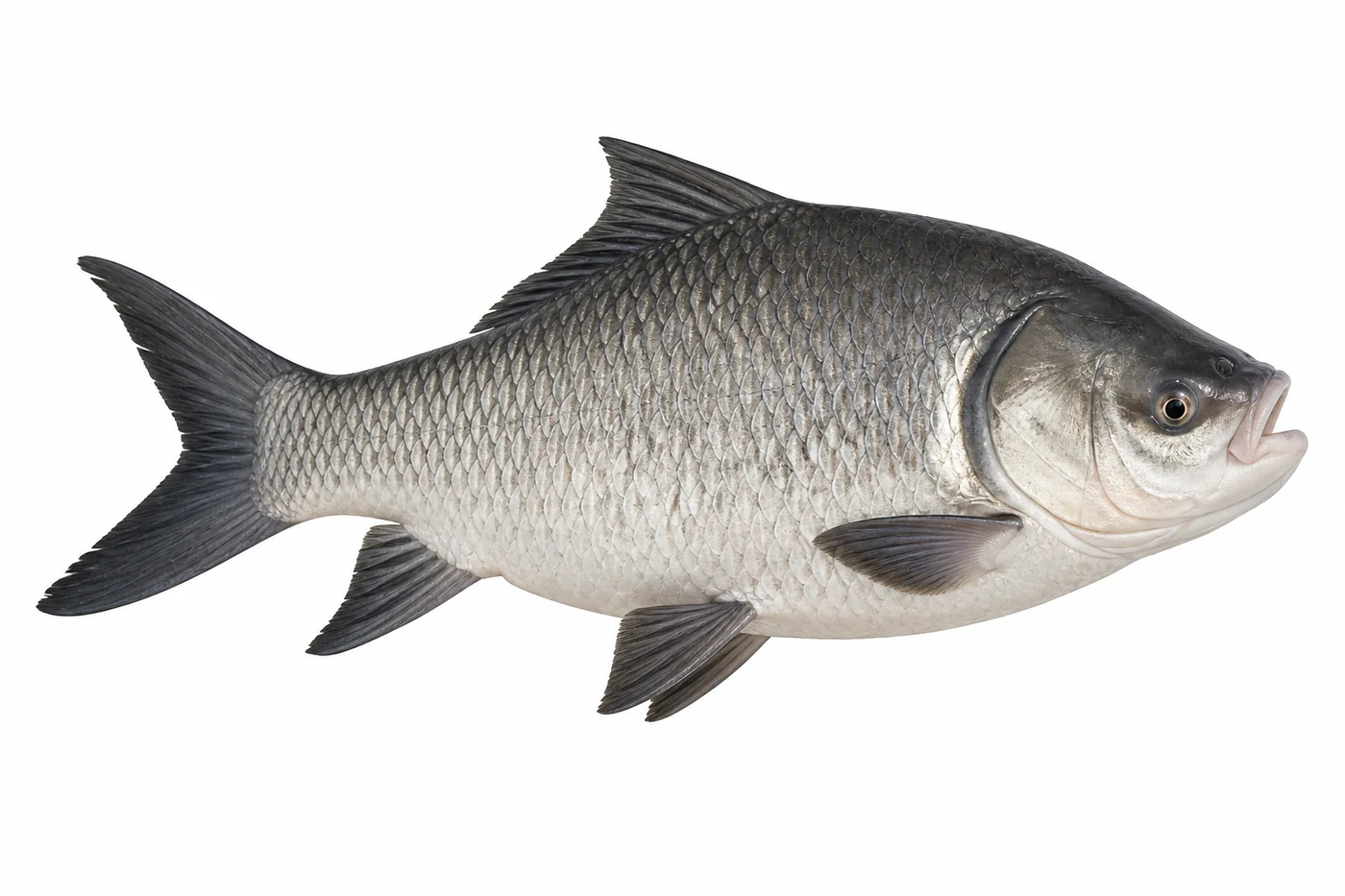
- Very deep body with a broad, upturned head and large mouth.
- Surface to mid-water feeder specializing in zooplankton, especially during younger stages.
- Popular whole fish with high regional market recognition.
PROFILE
Historical background
Catla is an iconic Indian major carp cultured throughout South Asia. Induced breeding and composite culture made planned seed and grow-out possible beyond reliance on seasonal river collection.
PROFILE
Habits and behaviour
Catla occupies rivers, reservoirs and floodplain waters. It feeds primarily in the upper water column, filtering and capturing plankton. In culture ponds it benefits from productive water, but excessive bloom density can create instability.
PROFILE
Biology and life-cycle relevance
A riverine seasonal spawner that is commonly propagated through induced breeding. Warm water supports growth, and juvenile stocking is often coordinated with Rohu and other carps to use pond food resources efficiently.
PROFILE
Suitable water ecosystem
Warm productive freshwater ponds, reservoirs and river-connected habitats with adequate depth, plankton and oxygen.
WATER AND NUTRITION
Indicative water-planning parameters
- Temperature
- 25-32 °C Parameter Early planning target
- Salinity
- Freshwater; typically below 2 ppt
- pH
- 7.0-8.5
- Dissolved oxygen
- Target at or above 5 mg/L
- Additional control focus
- Track oxygen through the daily cycle, plankton density, pH swing, alkalinity, ammonia, transparency and feeding response.
Validate stage-specific targets, alarm limits and nitrogen thresholds through the approved system design.
WATER AND NUTRITION
Nutritional profile
- High-quality protein
- Lean to moderate fat depending on size, feed and season
- Provides phosphorus, selenium and useful unsaturated fatty acids
Nutrition varies with feed, environment, season, harvest size, body portion and preparation. Use approved food-composition or laboratory data before publishing numeric per-100 g values.
PRODUCTION
Production cycle
Hatchery spawning produces spawn for nursery and fingerling rearing, followed by composite pond or approved reservoir grow-out. The production plan coordinates Catla with species occupying other feeding zones.
PRODUCTION
Production systems
- Composite carp ponds
- Reservoir cages where appropriate
- Hatchery and nursery
- Freshwater RAS for selected stages
- Integrated pond farming
PRODUCTION
Seed supply
Use correctly identified, healthy seed with documented hatchery source. Catla can be confused with hybrids or mixed carp batches, so stock identity and uniformity deserve inspection.
PRODUCTION
Nursery
Fine natural plankton is important to early stages. Nursery preparation, predator control, fertilization, supplementary feed and density should support survival without unstable blooms.
PRODUCTION
Ongrowing techniques
Catla uses upper-water food resources and is commonly grown with Rohu and bottom-feeding carps. Aeration and water monitoring must account for the whole pond community and daily oxygen cycle.
PRODUCTION
Feed supply
Natural zooplankton and supplementary or commercial feed contribute to growth. Feeding and pond fertilization should be recorded together to avoid overloading the ecosystem.
PRODUCTION
Diseases and control measures
Seed screening, pond stability, nutrition and gentle handling reduce risk. Environmental stress, parasites and bacterial conditions require qualified diagnosis.
PRODUCTION
Harvesting techniques
Deep-bodied fish need suitable mesh, careful crowding and low-drop handling. Partial harvest can manage market size if pond logistics permit.
PRODUCTION
Handling and processing
Catla is commonly sold whole or in steaks. Icing, clean handling and quick market movement protect quality; the large head and body shape influence yield.
PRODUCTION
Market and trade
Catla has strong domestic demand, particularly at larger sizes. Buyer preferences and the balance with other carp harvests should define the stocking and sale plan.
STATUS AND TRENDS
Status and trends
Composite carp aquaculture remains a major production platform. Better hatchery genetics, nursery quality, oxygen management and cold chain offer practical improvement.
MAIN ISSUES
Main issues
- Mixed or low-quality seed
- Plankton bloom and oxygen swings
- Correct polyculture balance
- Handling of deep-bodied fish
- Market size and harvest coordination
SYSTEM DESIGN
System-design implications
- Design pond aeration for pre-dawn oxygen risk, not only daytime readings.
- Stocking should complement the full polyculture feeding structure.
- Large head and body shape affect grading, netting and processing yield.
- Hatchery planning should protect broodstock and seed traceability.
PROJECT DEFINITION
Move from species interest to project definition
A suitable system depends on exact stock, life stage, target biomass, source water, utilities, site, operating capability, regulation and market plan.
Internal links: Species directory; Relevant service; Products & Equipment; Knowledge Center; Contact
Discuss a Catla Culture System