
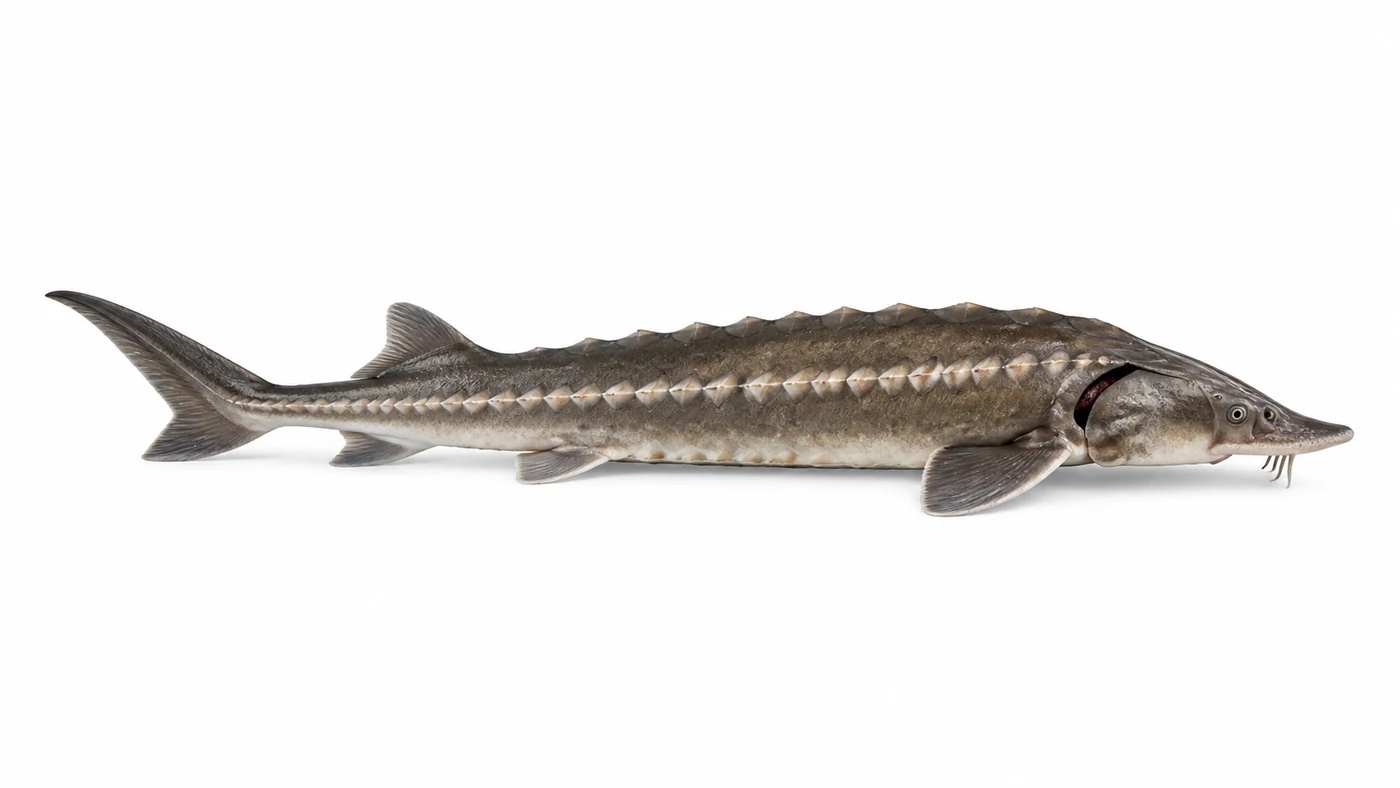
SPECIES PROFILE
Species profile
A cool-water species suited to oxygen-rich freshwater systems with long-cycle biomass planning.
Also known as: Acipenser baerii
VALIDATION NOTICE
Technical or regulatory validation notice
Confirm regional stock, hatchery performance and local approvals before project implementation.
SPECIES PROFILE
Pictographic profile
- Water
- Freshwater
- Behaviour
- Active schooling fish
- Feeding
- Carnivore
- Culture route
- Cold-water RAS or raceway
- Status
- Planning candidate
IDENTITY
Species overview
A cool-water species suited to oxygen-rich freshwater systems with long-cycle biomass planning.
IDENTITY
Biological features
- Active swimmer requiring stable water quality and suitable tank geometry.
- Commercial performance depends on stock, life stage and validated feed pathway.
PROFILE
Historical background
The species is established in regional fisheries and is being evaluated for controlled aquaculture pathways.
PROFILE
Habits and behaviour
Behaviour, stocking density and handling tolerance should guide tank layout, grading and transfer routines.
PROFILE
Biology and life-cycle relevance
Hatchery, nursery and ongrowing stages have different temperature, flow, feed and biosecurity requirements.
PROFILE
Suitable water ecosystem
Cool oxygen-rich freshwater with stable oxygen, solids control and stage-appropriate water quality.
WATER AND NUTRITION
Indicative water-planning parameters
- Temperature
- 15–22 °C*
- Salinity
- Freshwater; typically below 2 ppt
- pH
- Validate by source water and life stage
- Dissolved oxygen
- Maintain a high, stable level with alarmed redundancy
- Additional control focus
- Temperature, ammonia, nitrite, alkalinity and suspended solids
Indicative planning bands only; validate the exact stock and life stage.
WATER AND NUTRITION
Nutritional profile
- Use a species- and life-stage-appropriate formulated feed.
- Set feed rate from biomass, temperature, water quality and observed response.
Nutrition and feed conversion require local validation.
PRODUCTION
Production cycle
Flow-through raceways; large circular tanks; cold-water RAS.
PRODUCTION
Production systems
Cool-water RAS or flow-through raceways with dependable filtration.
PRODUCTION
Seed supply
Use approved hatchery seed or validated broodstock programmes.
PRODUCTION
Nursery
Separate nursery zones support grading, biosecurity and low-stress transfer.
PRODUCTION
Ongrowing techniques
Size tanks, hydraulics, oxygen and solids capture around target biomass.
PRODUCTION
Feed supply
Automated or closely monitored feeding with response-based adjustment.
PRODUCTION
Diseases and control measures
- Quarantine new stock and separate clean/dirty flows.
- Monitor oxygen, temperature, ammonia, nitrite and suspended solids.
PRODUCTION
Harvesting techniques
Plan gentle capture, grading, chilling and transfer access.
PRODUCTION
Handling and processing
Protect hygiene, temperature and product quality through organized handling.
PRODUCTION
Market and trade
Confirm target size, product format, buyer requirements and cold-chain route.
STATUS AND TRENDS
Status and trends
Interest is strongest where controlled systems can solve water, biosecurity and consistency constraints.
MAIN ISSUES
Main issues
- Cool-water temperature control
- High oxygen reliability
- Long production cycle
- Continuous solids capture and welfare
SYSTEM DESIGN
System-design implications
- Design temperature control and oxygen redundancy as primary systems.
- Use bottom-drain or continuous solids capture for large circular tanks.
- Provide generous access for grading, welfare checks and harvest.
PROJECT DEFINITION
Move from species interest to project definition
Define exact stock, life stage, target biomass, source water, utilities, site, regulation and market before detailed engineering.
Internal links: Species directory; Relevant service; Products & Equipment; Contact
Discuss a Siberian Sturgeon Aquaculture System