
SPECIES PROFILE
Species profile
A high-value euryhaline predator connecting mangrove nursery habitats with coastal marine grow-out.
Also known as: Mangrove red snapper; Mangrove jack; River snapper; Creek red bream; Red snapper (regional usage varies)
SPECIES PROFILE
Pictographic profile
- Water
- Estuarine/marine
- Behaviour
- Ambush predator
- Feeding
- Carnivore
- Culture route
- Cage, pond or marine RAS
- Status
- Exact Lutjanus species required
IDENTITY
Species overview
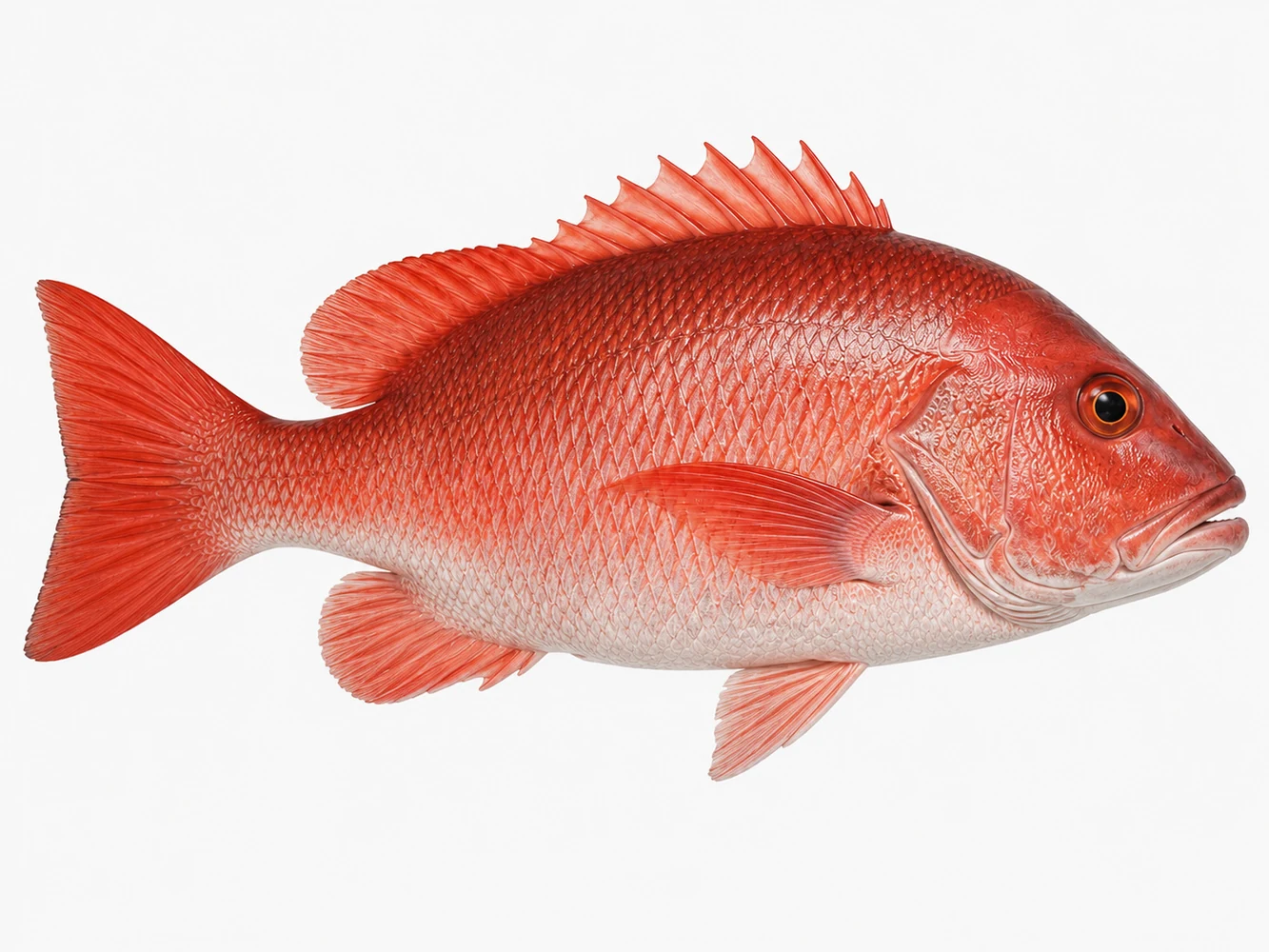
Here, ‘red snapper’ refers to mangrove red snapper, Lutjanus argentimaculatus, an Indo-Pacific aquaculture candidate demonstrated in marine cage culture by ICAR-CMFRI. Because several Lutjanus species are sold as red snapper, confirm the exact species for each project.
IDENTITY
Biological features
- Robust reddish-copper snapper with a sloping forehead, large mouth and strong canine teeth.
- High-value carnivorous finfish adapted to estuarine nursery habitats and coastal marine waters.
- Suitable for premium whole-fish, chilled and live-market positioning where handling and logistics are appropriate.
PROFILE
Historical background
Several tropical snappers are sold under the name red snapper. Mangrove red snapper, Lutjanus argentimaculatus, has a relevant foundation in Indian hatchery, broodstock and cage-culture work. Confirm the intended Lutjanus species for every project and market.
PROFILE
Habits and behaviour
Juveniles use mangrove creeks, estuaries and lower-salinity nursery areas; larger fish move toward deeper coastal water, reefs and rocky habitats. The species is a carnivorous predator of fish and crustaceans and often feeds most actively during lower-light periods.
PROFILE
Biology and life-cycle relevance
Mangrove red snapper has separate sexes and produces pelagic marine eggs. Hatchery larvae require small live feeds and carefully managed marine water; juveniles can adapt across a broad salinity range, but acclimation and stock history remain important. Nursery grading and even feed access help manage size hierarchy.
PROFILE
Suitable water ecosystem
Warm estuarine, brackishwater and coastal marine environments with stable salinity, strong oxygen availability and controlled organic loading.
WATER AND NUTRITION
Indicative water-planning parameters
- Temperature
- 26–30 °C for grow-out; hatchery stages require tighter control
- Salinity
- 10–35 ppt for juveniles and grow-out; larval systems commonly use near-marine salinity
- pH
- 7.5–8.5
- Dissolved oxygen
- Target at or above 5 mg/L
- Additional control focus
- Confirm the exact Lutjanus species and seed origin; manage oxygen, carbon dioxide, solids, ammonia, nitrite, salinity transition, grading and feeding response.
Validate stage-specific targets, alarm limits and nitrogen thresholds through the approved system design.
WATER AND NUTRITION
Nutritional profile
- High-quality complete protein
- Generally lean to moderate in fat, depending on feed and harvest condition
- Provides vitamin B12, selenium, phosphorus and marine omega-3 fatty acids
Nutrition varies with feed, environment, season, harvest size, body portion and preparation. Use approved food-composition or laboratory data before publishing numeric per-100 g values.
PRODUCTION
Production cycle
Marine broodstock produce pelagic eggs and larvae, followed by live-feed larviculture, nursery weaning and grading. Juveniles may enter marine cages, brackishwater ponds or controlled tanks before harvest for live, whole-chilled or processed markets.
PRODUCTION
Production systems
- Marine cage culture
- Brackishwater coastal ponds
- Marine or brackishwater RAS
- Hatchery and nursery systems
- Live holding and quarantine
PRODUCTION
Seed supply
Use hatchery juveniles with verified Lutjanus identity, legal origin, health status, size and salinity history. Do not substitute wild juveniles or another red-coloured snapper without explicit biological and legal review.
PRODUCTION
Nursery
Larvae require high-quality marine water and a carefully sequenced live-feed programme. Juveniles need feed training, grading and even feed access to manage size hierarchy and predatory behaviour.
PRODUCTION
Ongrowing techniques
Marine cages are a demonstrated pathway, while brackishwater ponds and marine RAS may be considered after site and stock review. Oxygen, salinity, current, feed waste, net integrity and escape prevention are major controls.
PRODUCTION
Feed supply
Complete marine carnivorous-fish feeds are preferred for controlled production. Pellet size, storage and delivery should match feeding behaviour and minimize dependence on raw forage fish.
PRODUCTION
Diseases and control measures
Hatchery and grow-out may face bacterial, parasitic and viral risks. Screened seed, quarantine, water stability, net or tank hygiene and professional diagnosis should govern control.
PRODUCTION
Harvesting techniques
Plan fasting, crowding, capture and transfer to protect scale, fin and jaw condition. Live-market systems need separate conditioning and transport capacity; chilled product needs immediate icing.
PRODUCTION
Handling and processing
The fish may be sold live, whole chilled, gutted or filleted. Species identity, hygiene, rapid temperature reduction and lot traceability support premium positioning.
PRODUCTION
Market and trade
Red snapper is a commercially powerful but imprecise name. Buyer specifications should state the accepted scientific identity, size, product form and live or cold-chain conditions.
STATUS AND TRENDS
Status and trends
Hatchery progress and cage demonstrations support interest in mangrove red snapper diversification. Responsible scale-up depends on dependable seed, complete feed, species-level traceability and locally validated economics.
MAIN ISSUES
Main issues
- Common-name ambiguity
- Dependable hatchery seed
- Carnivorous feed and nursery grading
- Cage exposure or marine RAS cost
- Live transport, cold chain and traceability
SYSTEM DESIGN
System-design implications
- The exact snapper species is a primary biological and commercial design input.
- Nursery layouts should support grading, observation and low-stress transfer.
- Marine RAS and cage projects require strong oxygen, solids and corrosion-aware material planning.
- Harvest, live-holding and cold-chain workflows should protect premium whole-fish quality.
PROJECT DEFINITION
Move from species interest to project definition
A suitable system depends on exact stock, life stage, target biomass, source water, utilities, site, operating capability, regulation and market plan.
Internal links: Species directory; Relevant service; Products & Equipment; Knowledge Center; Contact
Discuss a Red Snapper Aquaculture System