
SPECIES PROFILE
Species profile
A hardy air-breathing freshwater fish with strong potential for warm-water intensive production.
Also known as: African sharptooth catfish; North African catfish; African magur
VALIDATION NOTICE
Technical or regulatory validation notice
India regulatory caution: African catfish is treated as an invasive exotic and is subject to prohibition and enforcement action. Do not promote an Indian culture project without current written clearance from the competent authorities.
SPECIES PROFILE
Pictographic profile
IDENTITY
Species overview
African catfish can tolerate conditions that would challenge many finfish because it can breathe atmospheric air. Commercial design should not use that hardiness as a reason to accept poor water: stable oxygen, temperature, solids and nitrogen control still support feeding, welfare and predictable operation.
IDENTITY
Biological features
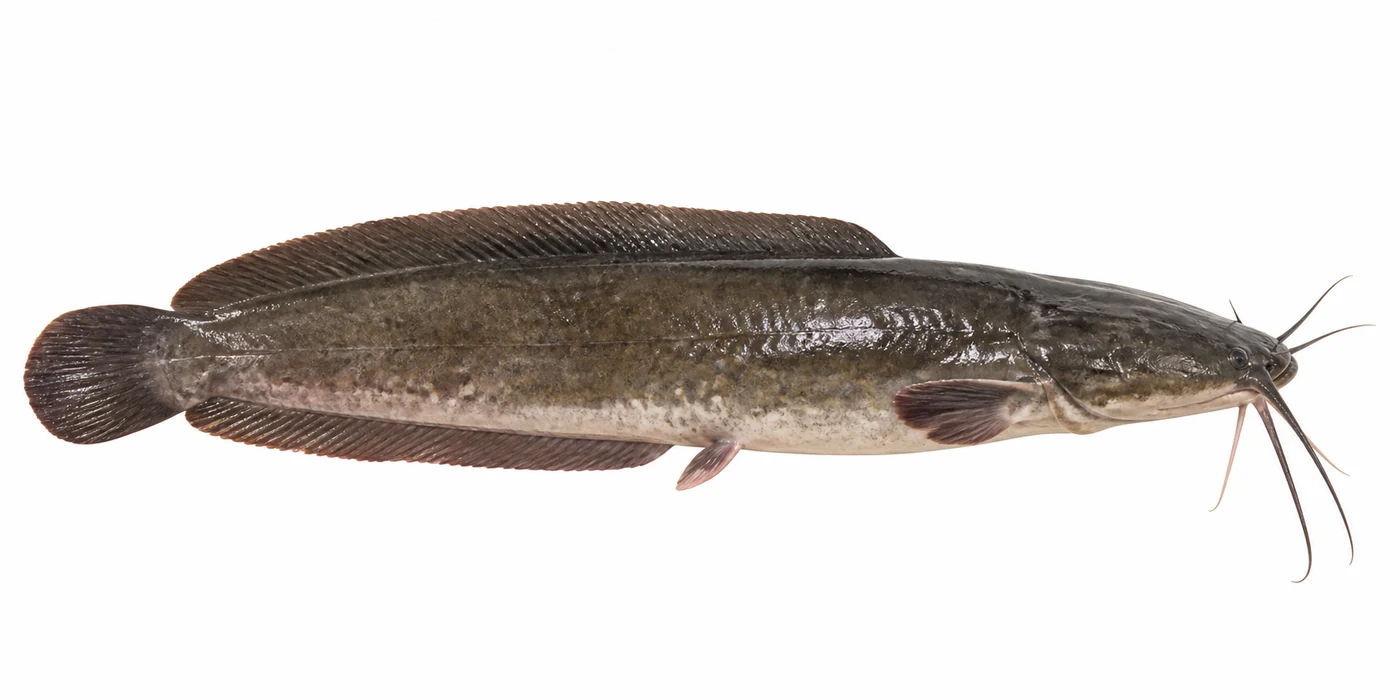
- Long, scaleless body with a broad head, barbels and extended dorsal and anal fins.
- Accessory air-breathing organs allow survival during low-water oxygen events.
- Strong feeding response and suitability for ponds, tanks, Biofloc and RAS.
PROFILE
Historical background
African catfish became an important farmed fish in Africa, Europe and parts of Asia because it tolerates intensive systems and accepts formulated feed. In India it is treated as an invasive exotic and has been subject to prohibition and enforcement action; this page must be educational and legally reviewed, not a cultivation promotion.
PROFILE
Habits and behaviour
The species inhabits warm rivers, lakes, floodplains, swamps and temporary pools. It is mainly nocturnal and opportunistic, feeding on insects, fish, crustaceans, molluscs and plant material. Size variation can lead to cannibalism during early stages.
PROFILE
Biology and life-cycle relevance
African catfish is a seasonal floodplain spawner in nature and is commonly reproduced through hatchery induction. Larval and fingerling production requires size management, frequent feeding, hygiene and careful transition to formulated diets.
PROFILE
Suitable water ecosystem
Warm freshwater with calm areas, robust oxygen support, good solids removal and secure containment.
WATER AND NUTRITION
Indicative water-planning parameters
- Temperature
- 26-30 °C
- Salinity
- Freshwater; only low salinity with validated acclimation
- pH
- 6.0-9.0
- Dissolved oxygen
- Target at or above 4 mg/L despite air-breathing ability
- Additional control focus
- Manage solids, ammonia, nitrite, feed residues, temperature and stocking uniformity; prevent escape and provide safe access to the air-water interface.
Validate stage-specific targets, alarm limits and nitrogen thresholds through the approved system design.
WATER AND NUTRITION
Nutritional profile
- High-quality protein
- Fat content varies with feed, harvest size and cut
- Provides vitamin B12, selenium, phosphorus and useful fatty acids
Nutrition varies with feed, environment, season, harvest size, body portion and preparation. Use approved food-composition or laboratory data before publishing numeric per-100 g values.
PRODUCTION
Production cycle
Where lawful, managed broodstock and induced spawning produce eggs and larvae, followed by a closely graded nursery and pond, tank or RAS grow-out. In India, no project cycle should be proposed without written confirmation from competent authorities.
PRODUCTION
Production systems
- Earthen ponds
- Warm-water RAS
- Biofloc tanks
- Hatchery and nursery
- Flow-through or hybrid tank systems
PRODUCTION
Seed supply
Seed legality, species identity and movement permission are primary gates. Unverified or clandestine seed is unacceptable; the website should direct Indian enquiries to regulatory review and suitable approved alternatives.
PRODUCTION
Nursery
The species can be strongly cannibalistic. Frequent feeding, grading, secure screens and clear mortality management are required where culture is legally authorized.
PRODUCTION
Ongrowing techniques
Internationally it is grown in ponds, tanks and RAS. Air breathing does not eliminate oxygen, ammonia, solids or welfare requirements, and escape prevention is critical for a non-native species.
PRODUCTION
Feed supply
Complete feeds matched to size are preferred. Feed storage, water stability and ration control matter in intensive systems; unapproved animal waste or poor-quality feed creates health and food-safety risks.
PRODUCTION
Diseases and control measures
Bacterial, parasitic and fungal conditions can occur. Prevention includes legal seed, quarantine, stable water, sanitation, secure mortalities and qualified diagnosis.
PRODUCTION
Harvesting techniques
Strong, slippery fish need secure capture and worker-safe handling. Humane harvest, hygienic washing and rapid chilling should follow local rules.
PRODUCTION
Handling and processing
The fish may be sold whole, smoked or filleted internationally. Product handling requires standard food-safety and cold-chain controls and must not bypass legal restrictions.
PRODUCTION
Market and trade
Although markets exist internationally, Indian cultivation and sale must be considered within current national and state rules. Commercial demand does not override environmental or fisheries law.
STATUS AND TRENDS
Status and trends
Global culture continues, but Indian policy attention emphasizes eradication and control of invasive exotic African catfish. Marine Blue should publish a regulatory caution and avoid implying project availability in India.
MAIN ISSUES
Main issues
- Indian legal and regulatory restriction
- Invasive-species and escape risk
- Seed misidentification
- Cannibalism and secure containment
- Food-safety and environmental responsibility
SYSTEM DESIGN
System-design implications
- Design for warm-water load, high feeding activity and robust solids removal.
- Do not obstruct access to surface air.
- Nursery grading and cannibalism control should be operational priorities.
- Tanks, screens and harvest equipment should withstand active, powerful fish.
PROJECT DEFINITION
Move from species interest to project definition
A suitable system depends on exact stock, life stage, target biomass, source water, utilities, site, operating capability, regulation and market plan.
Internal links: Species directory; Relevant service; Products & Equipment; Knowledge Center; Contact
Plan an African Catfish Facility